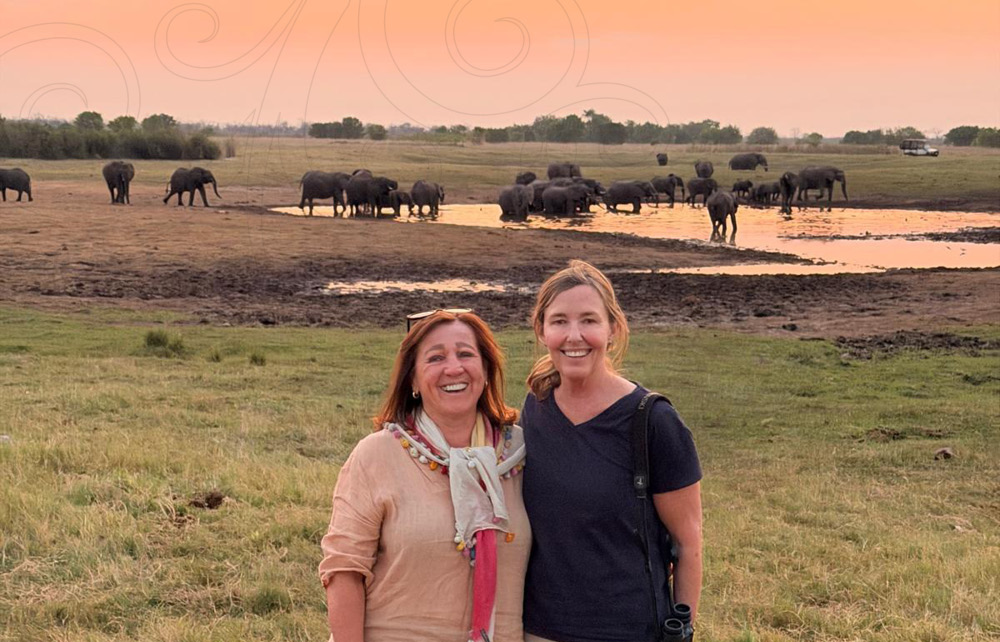
I’ve travelled to many wonderful places across Africa, but my recent six-night journey through Imvelo Safari Lodges in Zimbabwe was a particularly memorable one. Of course, there were extraordinary wildlife encounters, beautiful camps and some spectacular landscapes. But what stayed with me most was seeing firsthand how responsible safari tourism can make a real difference to the communities and wildlife that call these places home.
Our journey took us through three very different camps – Nehimba, Bomani and Tum Tum – each offering its own perspective on Hwange National Park and the surrounding communities.
Nehimba: Elephants, Elephants and More Elephants
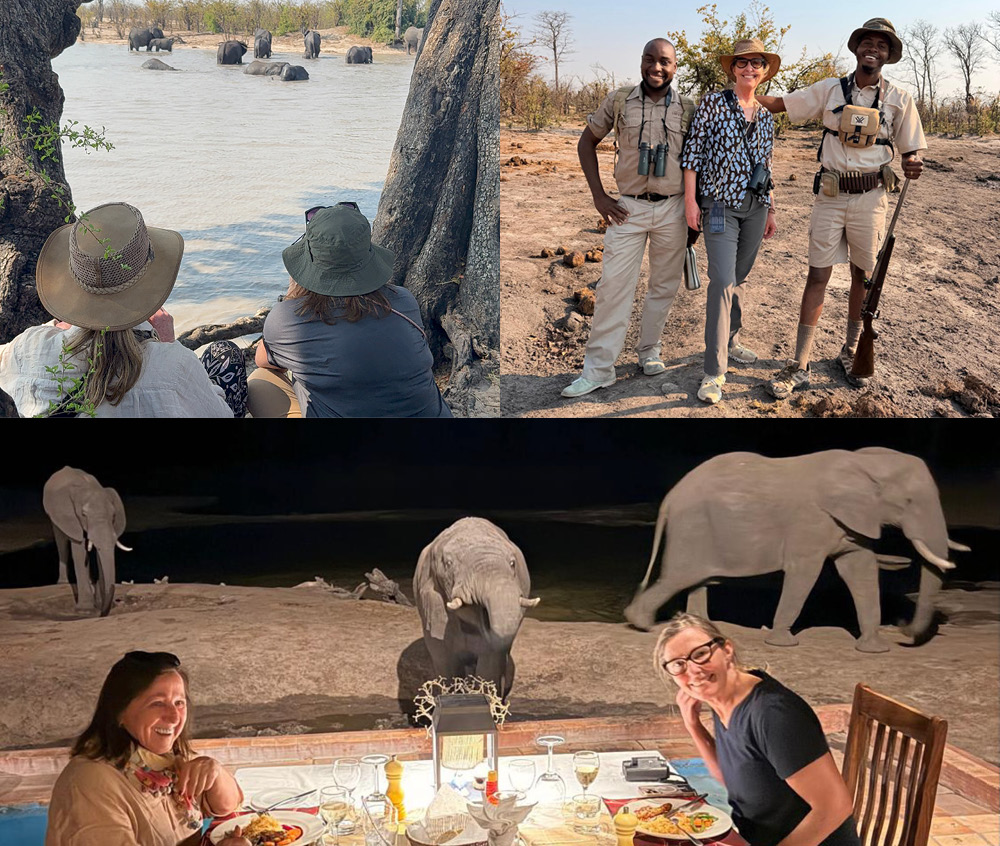
Our introduction to Nehimba was pretty spectacular. Just ten minutes after landing on the airstrip, our ranger Liberty pulled off into the mopane woodland and invited us to follow him on foot. A few minutes later, we were sitting beneath a large tree watching around 50 elephants arrive at a nearby pan to drink, swim and play together. What an introduction!
Nehimba is a wonderful destination for elephant lovers. During our two-night stay, we must have seen close to 1,000 elephants. The camp overlooks a busy waterhole, and one of its most memorable features is the swimming pool, where elephants regularly come to drink just metres away. There’s something rather special about enjoying dinner while watching these magnificent animals going about their business.
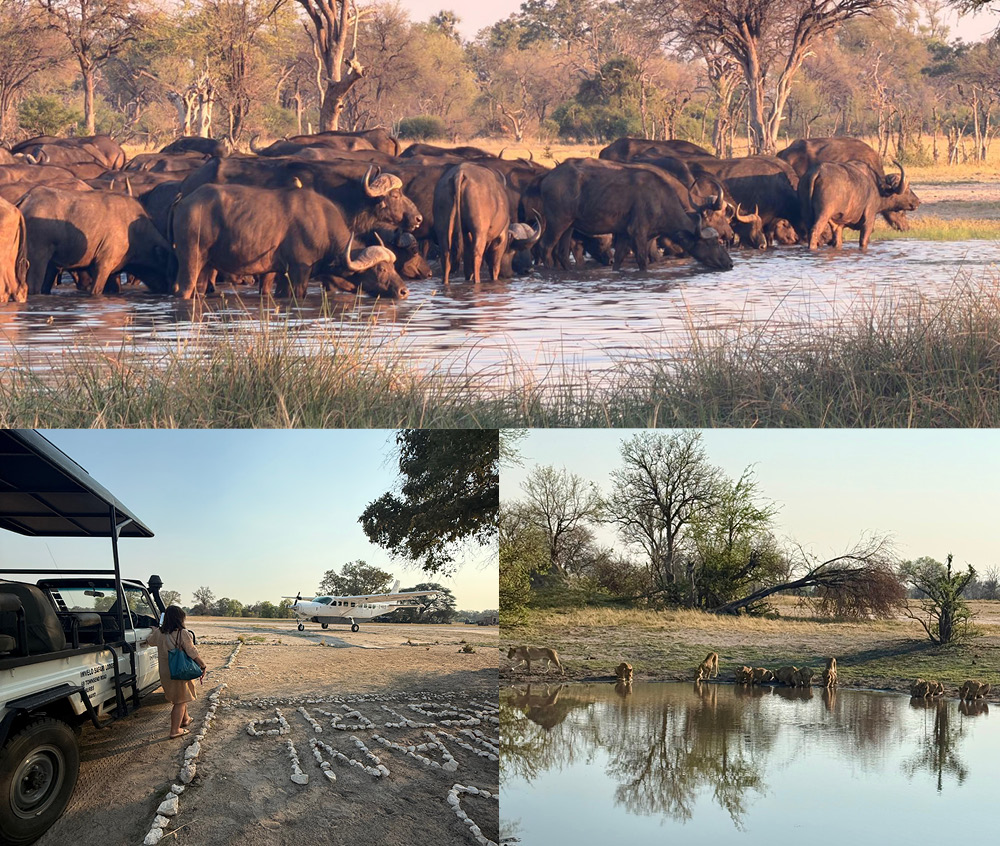
Our wildlife encounters didn’t stop with the elephants. We enjoyed a walking safari with Liberty, getting surprisingly close to a breeding herd of buffalo as they rushed towards a pan, as well as several bull elephants. We also encountered a pride of seven lions, wild dogs, hippos, giraffe, zebra and a leopard near camp. Liberty’s knowledge of the bush was exceptional, and his enthusiasm for sharing it made every outing interesting.
Bomani: Where Conservation and Community Come Together
Bomani was another highlight, particularly for its beautiful setting on the edge of the Ngamo Plains. The open landscapes and active waterholes made for some wonderful wildlife viewing.
We spent time with a pride of 22 lions close to camp, watching them attempt to hunt wildebeest and later buffalo. We also had the privilege of seeing wild dogs hunting in front of camp. One particularly enjoyable experience was the Elephant Express sundowner trip – a wonderfully unique way to explore the area, travelling along the railway line as the sun set over the plains.
But it was our time away from the game drives that made Bomani especially memorable.
We spent a full day learning about Imvelo’s community and conservation initiatives, and it was genuinely inspiring to see what can be achieved when tourism is connected to the needs of local communities.
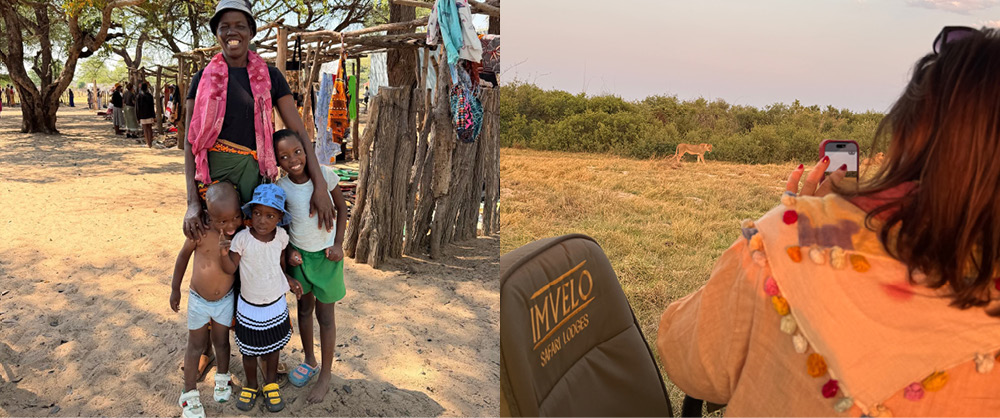
In Ngamo Village, we visited an impressive healthcare clinic providing free medical care to the surrounding community. Much of its development has been made possible through tourism and donor support. We also visited the local market, met the village headman and learnt how many people from Ngamo and neighbouring villages are employed by Imvelo’s lodges.
One of the most fascinating visits was to the Rhino Sanctuary and Cobra Unit, where we learnt about the work being done to protect rhinos and combat poaching. Meeting Daniel, who heads the unit, and hearing about the sanctuary’s approach to conservation and community involvement was a real highlight. We also enjoyed a close encounter with two of the resident rhinos, accompanied by their dedicated protection team.
It was a powerful reminder that safari tourism, when done thoughtfully, can have a far-reaching impact beyond the lodge gates.
Tum Tum: A Treehouse in the Wilderness
Our final stop was Tum Tum, a very different experience and a lovely way to end the circuit.
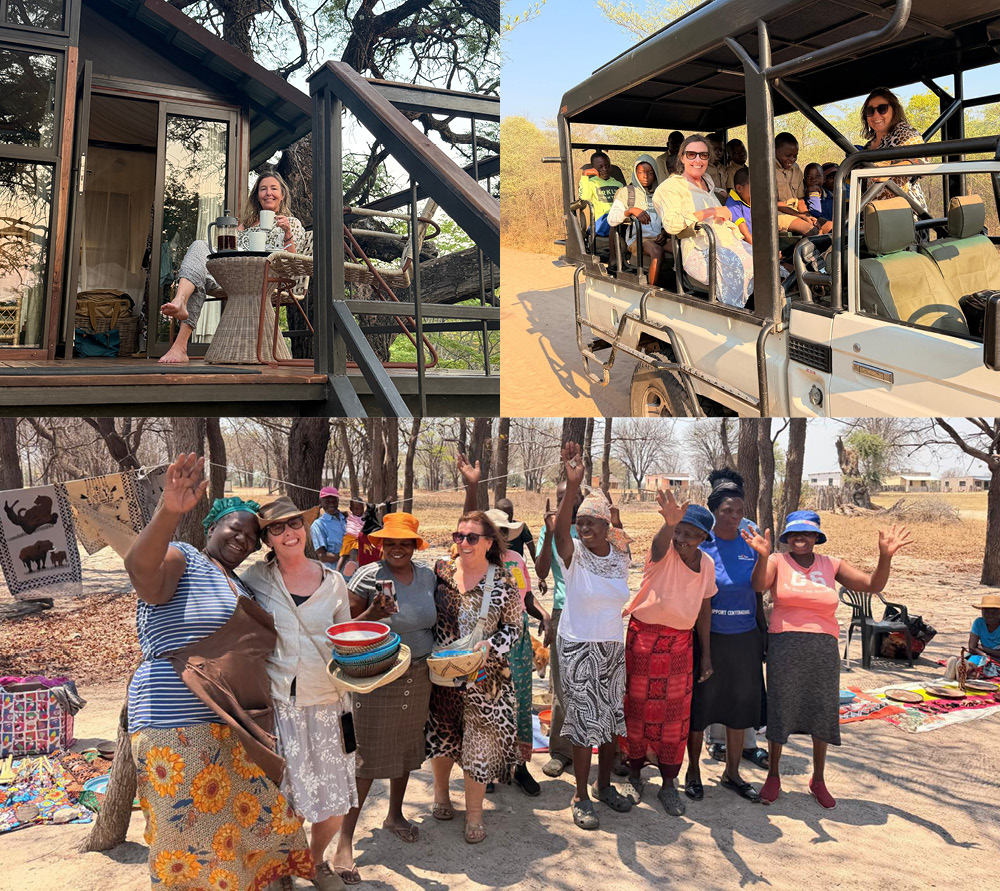
Set amongst the trees, the camp is wonderfully peaceful. The treehouses are a real treat, with beautiful, understated interiors and private decks overlooking the surrounding bush. Waking up in the treetops, with coffee delivered to our deck in the early morning, was one of those simple safari pleasures I’ll remember.
Tum Tum is less about chasing big game sightings and more about slowing down, enjoying the setting and getting to know the surrounding communities. We spent much of our time exploring the area on foot and visiting local villages.
One of the most memorable experiences was joining the school run. We collected children who would otherwise walk a considerable distance to school, and the excitement in the vehicle as they sang and clapped all the way there was infectious.
We visited a local secondary school, met the teachers and learnt about the progress being made through tourism-supported initiatives. We also visited a second rhino sanctuary and met Smile, who leads the training of anti-poaching dogs and their handlers. His own story, having once been involved in poaching before dedicating himself to protecting wildlife, was particularly inspiring.
Our village visits also included time at a small local market, where we couldn’t resist buying baskets and other handmade crafts. It was a lovely opportunity to support local traders directly and meet the people behind the products.
More than a Safari
What I took away from my time with Imvelo was a real appreciation of the connection between tourism, conservation and community development.
It’s easy to talk about responsible tourism, but seeing the projects firsthand – the clinic, the schools, the rhino sanctuaries and the anti-poaching dog units – brought that connection to life.
And of course, the wildlife experiences were wonderful. From hundreds of elephants at Nehimba to lions on the plains at Bomani, and the peaceful treetop setting of Tum Tum, each camp brought something different to the journey.
For anyone looking for a Zimbabwe safari that combines excellent wildlife experiences with meaningful community and conservation encounters, I’d certainly put the Imvelo circuit on the list.
I came away with some wonderful memories, a few more baskets than I probably needed, and a renewed appreciation for the positive role that safari tourism can play in protecting Africa’s wild places.